
Your swing plane is the single biggest factor behind where your ball starts and how it curves. Get it right and you compress the ball, hit it straighter, and repeat your strike. Get it wrong and you fight slices, hooks, fat shots, and thin shots that never seem to go away no matter how many balls you hit.
The good news: swing plane faults fall into three recognizable patterns, and each one has a clear cause and a proven set of fixes. This guide breaks down all three, gives you drills you can do at home or on the range, and shows which training aids physically train the correct motion so the fix actually sticks.
What Is the Swing Plane?
The swing plane is the angle and path the club travels on during your backswing and downswing. Picture a tilted pane of glass running from the ball up through your shoulders. A swing that stays on that pane delivers the club from a slightly inside path with a square face, which produces solid, straight contact.
When the club drifts above or below that ideal line on the way down, you get one of three faults:
-
Over-the-top: the club comes down too far outside the line, cutting across the ball.
-
Too steep: the club approaches on too vertical an angle, digging into the ground.
-
Too flat: the club swings too far around the body on too shallow an angle.
The 3 Swing Plane Faults at a Glance
|
Fault |
What it looks like |
Typical ball flight |
Common root cause |
|
Over-the-top |
Club drops outside the line, then cuts across the ball |
Slice, pull, weak fade |
Upper body and arms starting the downswing instead of the lower body |
|
Too steep |
Club comes down on a sharp, vertical angle |
Fat shots, deep divots, loss of distance |
Early extension, casting, or a downswing led by the hands |
|
Too flat |
Club swings too far around the body, shallow and inside |
Hooks, thin shots, hosel contact |
Over-rotating the arms flat, poor wrist set |
Use this table to identify your miss first, then jump to the matching section below.
Fault 1: Over-the-Top (The Most Common Swing Plane Error)
Over-the-top is the most common swing fault among amateur golfers and the number one cause of the slice. From the top of the backswing, the shoulders and arms throw the club outward, so it travels on an out-to-in path across the ball. The face is left open relative to that path, and the result is a slice or a pull.
How to self-diagnose: Your divots point left of target (for a right-handed golfer), the ball starts left and curves right, and your shots feel like a glancing, weak strike rather than a compressed one.
Drills to fix it:
-
The gate drill. Place a headcover or an alignment stick just outside your ball on the target line. If you swing over the top, you clip it. To miss it, you have to drop the club to the inside on the downswing.
-
Start the downswing from the ground up. Feel your weight shift into your lead foot before your arms move. This sequencing alone shallows the club for most golfers.
-
Pump drill. From the top, rehearse three slow downswings where the club drops behind your trail shoulder, then hit the fourth.
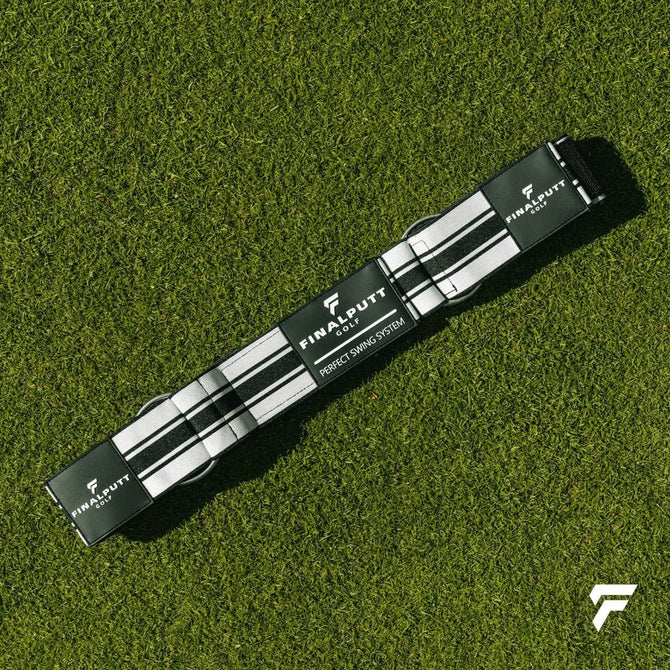
Training aids that train the fix: The Path Trainer Pro builds a physical gate on the ground using its included alignment sticks. Swing over the top and you hit the stick; swing on the correct inside path and you clear it, so you get instant feedback every rep. The Swing Sync keeps your trail arm connected to your body so the arms stop flying out and the club naturally drops onto an inside path. Both directly target the over-the-top move.
Fault 2: Too Steep
A steep downswing approaches the ball on too vertical an angle. Instead of shallowing into impact, the club drives down into the turf behind or at the ball. Steep swings often come from casting the club, early extension, or starting the downswing with the hands and wrists rather than the body.
How to self-diagnose: You take deep divots, hit fat or heavy shots, lose distance even on well-struck balls, and your ball flight feels low and weak.
Drills to fix it:
-
Shallow the shaft. From the top, feel the butt of the club point down toward the ball as your lead hip clears. This drops the club onto a shallower plane.
-
Trail-elbow tuck. Keep your trail elbow close to your side on the downswing instead of letting it lift away.
-
Towel-behind-the-ball drill. Place a towel a few inches behind the ball. A steep swing hits the towel first; a shallower angle catches the ball cleanly.
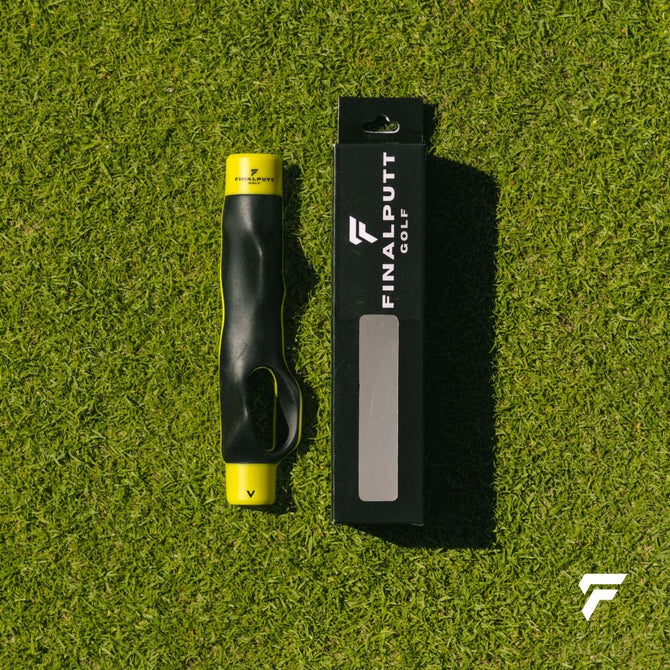
Training aids that train the fix: The Swing Plane Pro attaches to your club and guides it onto the correct plane every swing while locking the wrists into position, so a steep, scooping motion immediately feels wrong and a shallower, compressed strike feels smooth. The Wrist Trainer Pro locks the lead wrist to stop flipping and casting, promoting forward shaft lean and a more neutral angle of attack.
Fault 3: Too Flat
A flat swing travels too far around the body on a shallow, inside plane. The arms over-rotate behind you in the backswing, and the club gets stuck too far inside on the way down. Flat swings tend to produce hooks, thin contact, and the occasional shot off the hosel.
How to self-diagnose: The ball starts right and hooks hard left, you catch shots thin, and your backswing feels like it wraps around your body rather than working up toward your trail shoulder.
Drills to fix it:
-
Steeper shoulder turn. Feel your lead shoulder work down and across in the backswing rather than flat and around, so the club sets more upright.
-
Wall drill. Stand with your trail side a club-length from a wall and make backswings without the clubhead hitting it, training a more on-plane, less flat takeaway.
-
Set the wrists earlier. Hinge the club up sooner in the takeaway so it does not run flat and inside.
Training aids that train the fix: A general on-plane trainer like the Swing Plane Pro reinforces the correct plane on every rep, so an overly flat, around-the-body move feels wrong and the on-plane position feels natural. Pair it with the drills above to retrain a flat takeaway.
Your 4-Week Swing Plane Practice Plan
Fixing a plane fault is about reps with feedback, not occasional thoughts on the course. Spend about 10 minutes a day:
-
Week 1: Slow-motion swings at half speed, focused only on the corrected feel for your fault. No ball.
-
Week 2: Half-speed shots hitting a ball, checking that contact and ball flight improve.
-
Week 3: Full swings on the range, alternating drill reps with normal shots.
-
Week 4: Use your drill or training aid as a pre-round warm-up to lock the habit in before you play.
FinalPutt Swing Plane Training Aids Compared
All FinalPutt aids below are currently on sale (prices in USD). FinalPutt has helped over 130,000 golfers improve, with an average 4.8/5 rating across its training aids.
|
Training aid |
Best for |
What it fixes |
Price |
|
Over-the-top and swing path |
Builds a ground gate that forces an inside path; fixes slices and hooks. Includes free alignment sticks |
$44.95 (was $74.95) |
|
|
Arm connection |
Keeps the trail arm connected to the body to stop the chicken wing and over-the-top move |
$34.95 (was $58.25) |
|
|
Staying on-plane |
Attaches to the club and guides it on the correct plane while locking wrist angles for cleaner compression |
$34.95 (was $58.25) |
|
|
Wrist angles and casting |
Locks the lead wrist to stop flipping, promoting forward shaft lean and a neutral angle of attack |
$29.95 (was $49.95) |
Want expert guidance to go with the gear? The Path Trainer Pro Full Video Training Guide is a 5-video series led by PGA Professional Joe Coyle covering setup, fault fixes, and full-swing training ($9.95, was $16.45).
Frequently Asked Questions
What is the most common swing plane fault?
Over-the-top is the most common swing plane fault among amateurs. The arms and shoulders throw the club outward on the downswing, producing an out-to-in path that causes slices and pulls.
How do I know if my swing is too steep or too flat?
A steep swing takes deep divots and produces fat shots and low, weak ball flight. A flat swing wraps too far around the body and tends to produce hooks, thin contact, and hosel strikes. Checking your divot direction and depth is the quickest at-home diagnosis.
Can a training aid actually fix my swing plane?
Yes, when it gives instant physical feedback. Aids that build a gate, lock the wrists, or connect the arms to the body train the correct motion every rep, which is far more effective than trying to think your way through a swing change on the course.
How long does it take to fix a swing plane fault?
With about 10 minutes of focused, feedback-based practice a day, most golfers feel a meaningful difference within two to four weeks. Consistency of practice matters more than total hours.
What ball flight does an over-the-top swing cause?
Most commonly a slice, where the ball starts left and curves hard right for a right-handed golfer. It can also produce a straight pull when the face is square to the out-to-in path.
Put It All Together
Identify your fault from the comparison table, pick the two or three drills that match it, and give yourself a focused two-to-four-week block with real feedback. If you want the fix to stick faster, a training aid that physically guides the correct motion does the diagnosing for you on every swing.
For related fixes, see our guides on how to fix your slice and equipment and drills to straighten your driver, or browse the best golf training aids to improve your game in 2026.