






How Wide Should Your Golf Stance Be?
For most full shots with a driver, your feet should be roughly shoulder-width apart; for shorter irons and wedges, a narrower stance gives you better control. The right width depends on the club you're hitting, your height, and what you're trying to achieve with the shot.
Stance width is one of those setup details that looks simple but quietly shapes everything that follows. Get it right and your swing has a stable foundation. Get it wrong and you're compensating before you've even started your takeaway. Here's what you actually need to know.
- Driver stance reference: Inside heels aligned with outside of shoulders
- Wedge stance: Noticeably narrower than shoulder-width
- Measurement point: Always measure from the insides of the heels
How wide should my stance be for a golf swing?
Your stance width should match the club in your hand. With a driver, set your feet so the insides of your heels are roughly in line with the outsides of your shoulders. As the clubs get shorter, narrow your stance gradually so that with a pitching wedge your feet are noticeably closer together than with a 6-iron.
The reason is straightforward: longer clubs require a wider, more rotational swing with a shallower attack angle. A wide base keeps you stable through that bigger motion. Shorter clubs call for a steeper, more controlled strike, and a narrower stance naturally promotes that by limiting hip sway and centering your weight over the ball.
What happens if your stance is too wide?
A stance that's too wide prevents your hips from rotating fully through the ball, which kills both distance and consistency. Many golfers go wide thinking it adds power, but what it actually does is anchor the lower body so that the upper body has to over-rotate to compensate — leading to a steep, across-the-line swing path and weak contact.
You'll also notice it becomes harder to shift your weight properly. Instead of a clean transfer from trail side to lead side, you end up sliding or swaying. That lateral movement is one of the more common causes of thin and fat shots, particularly with mid-irons.
| Club | Approximate stance width (inside heels) | Why |
|---|---|---|
| Driver | Outside shoulder-width | Maximum stability for a wide, rotational arc |
| Fairway woods / hybrids | Shoulder-width | Balance between power and control |
| Long irons (3–5) | Just inside shoulder-width | Slightly more control without sacrificing distance |
| Mid-irons (6–8) | Clearly narrower than shoulders | Promotes a steeper angle of attack |
| Short irons / wedges | Noticeably narrow | Precision and clean turf contact |
Does your height affect how wide your stance should be?
Yes, taller golfers generally need a slightly wider base to stay balanced during the swing. Because a taller player has a higher center of gravity, a narrower stance creates more lateral instability — especially at the top of the backswing. Adding an inch or two of width can make a significant difference in how grounded you feel.
Shorter golfers tend to have a lower center of gravity naturally, so they can often work with a slightly narrower stance without losing stability. The key is that stance width should always feel athletic: think of the ready position in tennis or the way a basketball player sets up on defense. If you feel locked in place, you've gone too wide. If you feel like you might tip over, go wider.
How does stance width affect tempo and swing mechanics?
Stance width has a direct influence on your swing tempo because it controls how freely your lower body can move. A properly sized stance lets your hips rotate at the right pace relative to your shoulders, which is the foundation of good tempo. When that relationship breaks down — usually because the stance is off — timing falls apart regardless of how much you practice.
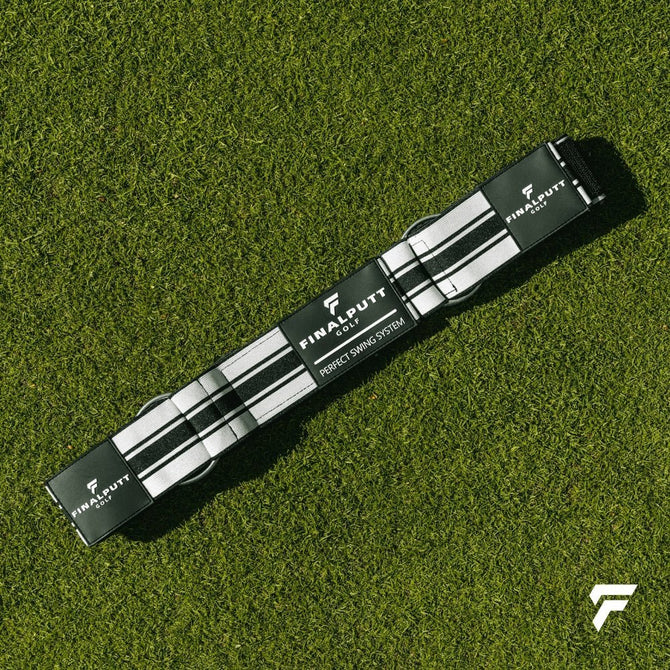
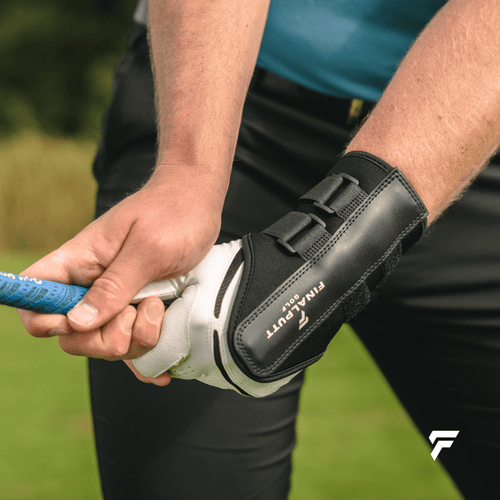
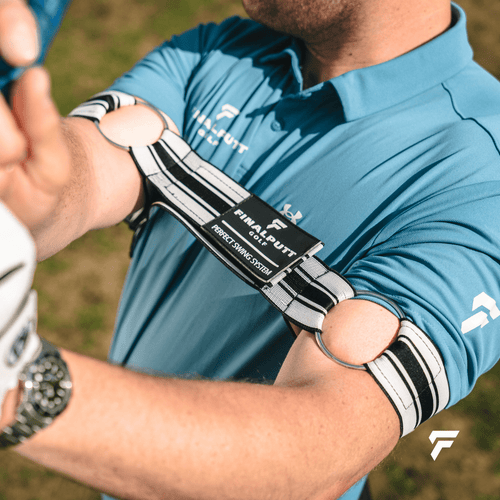
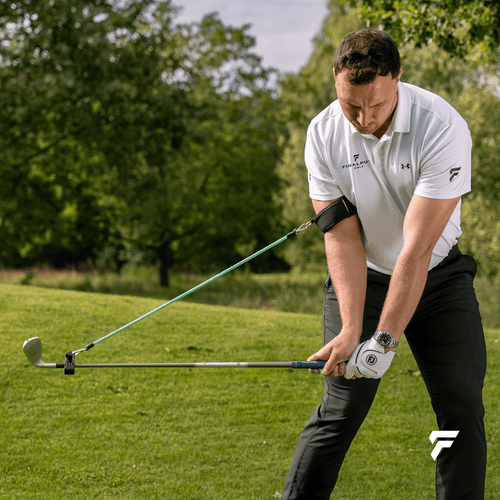
This is where working on your fundamentals with purpose pays off. Tools designed to improve swing mechanics and connection between your body and the club become far more effective when your setup is already sound. If your stance is too wide or too narrow, even the best training aid won't fix the root cause. Sorting out your stance width first gives every other element of your technique a better chance to work.
When is a wider or narrower stance actually the right call?
There are situations where deliberately adjusting your width makes sense. Playing from an uneven lie — particularly when the ball is above your feet — often calls for a slightly wider stance to lower your overall height and keep you balanced. Hitting into a strong headwind, some golfers narrow their stance slightly to encourage a more compact, punchy swing with less body movement.
Greenside bunker shots are a classic example where a wider-than-normal stance helps you dig in and stay stable through the sand. Conversely, a punch shot from under trees benefits from a narrower stance that naturally shortens your backswing and keeps the flight low. Understanding why stance width works the way it does lets you adapt your setup intelligently rather than guessing.
Frequently asked questions
Should my feet be parallel to the target line or slightly open?
For most standard shots, your feet should be roughly parallel to the target line. Many golfers flare the lead foot out by 20 to 30 degrees toward the target, which helps the hips rotate through at impact without strain. The trail foot can be kept square or flared slightly, depending on your hip flexibility.
Does stance width change for a chip shot around the green?
Yes, chipping calls for a noticeably narrow stance — feet only a few inches apart. This limits lower body movement and keeps the motion arms-and-shoulders driven, which is exactly what you want for consistent contact on short shots. Some golfers also open their stance slightly to improve their view of the target line.
How do I know if my current stance width is costing me distance?
If you feel restricted through the hitting zone or notice your trail heel staying on the ground at impact, your stance may be too wide. Record your swing from behind and check whether your hips are fully facing the target at the finish — if they're not, limited rotation from an overly wide stance is a likely cause.
Is stance width the same for left-handed and right-handed golfers?
The principles are identical regardless of which hand dominates. The reference points simply mirror: what is the lead foot for a right-handed golfer becomes the lead foot for a left-handed golfer. Club-by-club width guidelines apply equally to both, since the mechanics of balance and rotation are the same.
Tailored advice from FinalPutt B.V.
Want to know what this means for you? We are happy to help — no strings attached.
You may also like
Read more
 10 Fundamental Swing Tips Every Golfer Must Know
 What Is Swing Plane in Golf?
 How to Use The Rotation Trainer
 How to Use The Distance Plates ProWhat's the best chipping training aid to stop chunking and blading?
 Stop Topping the Ball, Fix Your Stance and Swing Today
 How to Use The Connection Band Pro
 What Is a Putting Stroke Path and Why Does It Matter?