
Helping a young golfer improve faster is less about hours on the range and more about building the right habits early, with tools that give instant, obvious feedback. Kids learn fastest when they can see whether a putt started on line or rolled at the right speed, and when practice feels like a game rather than a chore.
This guide breaks down what to look for in a junior training aid, then organizes our top picks by age group so you can match the tool to your child's stage of development. Every aid here is built around putting fundamentals, works indoors, and costs under $100.
What makes a training aid right for a junior golfer
Not every adult training aid suits a kid. The best ones for fast junior development share a few traits:
-
Instant feedback. A young player should immediately see the result of a stroke, whether the ball cleared a gate or missed a line. This shortens the learning loop.
-
Short, repeatable reps. Juniors have shorter attention spans, so tools that work in five to ten focused minutes beat anything that needs a long setup.
-
Indoor-friendly. Practice that can happen on a carpet or hallway after school means more reps over a season.
-
Fundamentals first. Start line, stroke path, and speed control are the three skills that carry a junior the furthest. Aids that isolate one of these are ideal.
-
Fun and forgiving. If it feels like a game, kids come back to it. If it feels like homework, it gathers dust.
How to pick by age
Younger players need simple, visual tools that reward a single clear outcome. As kids grow into their teens, they can handle aids that layer in stroke mechanics and tempo. Use the age bands below as a guide, but follow your child's interest and coordination over their birthday, every junior develops at their own pace.
Ages 5 to 8: make it a game
At this stage the goal is engagement and the most basic sense of aim and speed. Keep sessions short and celebrate small wins.
Top pick: Ball Gates ($49.95)
Ball Gates create a simple target the child has to roll the ball through, training start line and speed at the same time. The pass-or-miss outcome is exactly the kind of instant, visual feedback young kids respond to, and it works on any indoor surface.
Drill: Set the gate two feet away and let your child earn a point for every clean pass. Move it back a foot once they string together five in a row.
Ages 9 to 12: build real fundamentals
Now players can start to understand why a putt goes off line, not just that it did. This is the window to lock in a square start line and a consistent stroke path.
Top pick: The Putting Ruler ($34.95)
The Putting Ruler trains start line and stroke path with a clear visual track, and is designed to deliver results in about five minutes a day, which fits a junior's attention span well.
Also great: StartLine Pro ($24.95)
StartLine Pro uses an elevated string line to show exactly where the ball should start, reinforcing aim and alignment. At under $25 it is an easy add-on.
Drill: Have your child hit ten putts down the ruler from three feet, counting only the ones that start dead on line. The score, not the make, is what matters here.
Ages 13 to 17: refine the stroke
Teens can handle tools that combine feedback with mechanics and tempo, the details that separate a good junior from a competitive one.
Top pick: Pro Tutor ($44.95)
Pro Tutor uses a two-ball gate to deliver precise feedback on start line and contact, and ships with a carry case and six balls so a teen can practice anywhere.
Also great: Steady Stroke ($44.95)
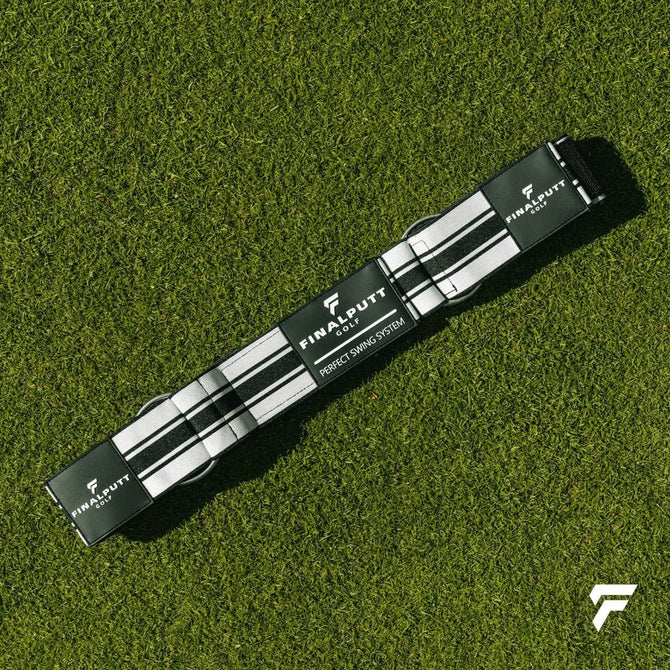
Steady Stroke is a wrist brace that trains tempo and speed control by promoting a stable, repeatable stroke, useful for a teen ironing out inconsistency under pressure.
Drill: Alternate five putts with the Pro Tutor gate and five free putts, checking whether the stroke holds up once the aid comes away.
A simple 15-minute junior practice routine
You do not need a long session to see progress. Try this three times a week:
-
Warm up (3 min): roll putts to a tee from short range, just to get the feel.
-
Skill block (7 min): use the age-appropriate aid above for focused reps.
-
Game (5 min): finish with a points challenge so practice ends on a fun, competitive note.
Consistency over a season beats marathon sessions, and short routines are far easier to keep a kid engaged with.
Want everything in one kit?
If you would rather cover start line, path, and speed in a single purchase, the [Putting Bundle](https://finalputt.com/products/putting-bundle) packages multiple putting aids together at a lower combined price.
Frequently asked questions
What is the best training aid for a young golfer just starting out?
For beginners, especially ages 5 to 8, a simple gate-style aid like Ball Gates works best because it gives instant pass-or-miss feedback and feels like a game.
How can I help my junior golfer improve their putting faster?
Focus on the fundamentals, start line, stroke path, and speed, with short, frequent sessions using an aid that gives immediate feedback. Five to ten focused minutes a few times a week beats occasional long sessions.
Are these training aids suitable for indoor practice?
Yes. Every aid in this guide is designed to work indoors on a carpet or flat surface, which makes year-round practice easy.
How much should I spend on a junior training aid?
You do not need to overspend. Every pick in this guide is under $100, and several effective options are under $50.
FinalPutt has helped over 130,000 golfers improve their game. All training aids are backed by a 30-Day Money Back Guarantee, with free shipping on orders over $60.